

Research Finds That Clinical Trials Regularly Lack Key Demographic Information
A study published in JAMA Network Open found that clinical trial data regularly exclude geographic and socioeconomic participant data, which may hinder researchers' ability to determine trial generalizability and outcome applicability across diverse populations and locations (Unger, 2026).
A study published in JAMA Network Open found that clinical trial data regularly exclude geographic and socioeconomic participant data, which may hinder researchers' ability to determine trial generalizability and outcome applicability across diverse populations and locations (Unger, 2026).
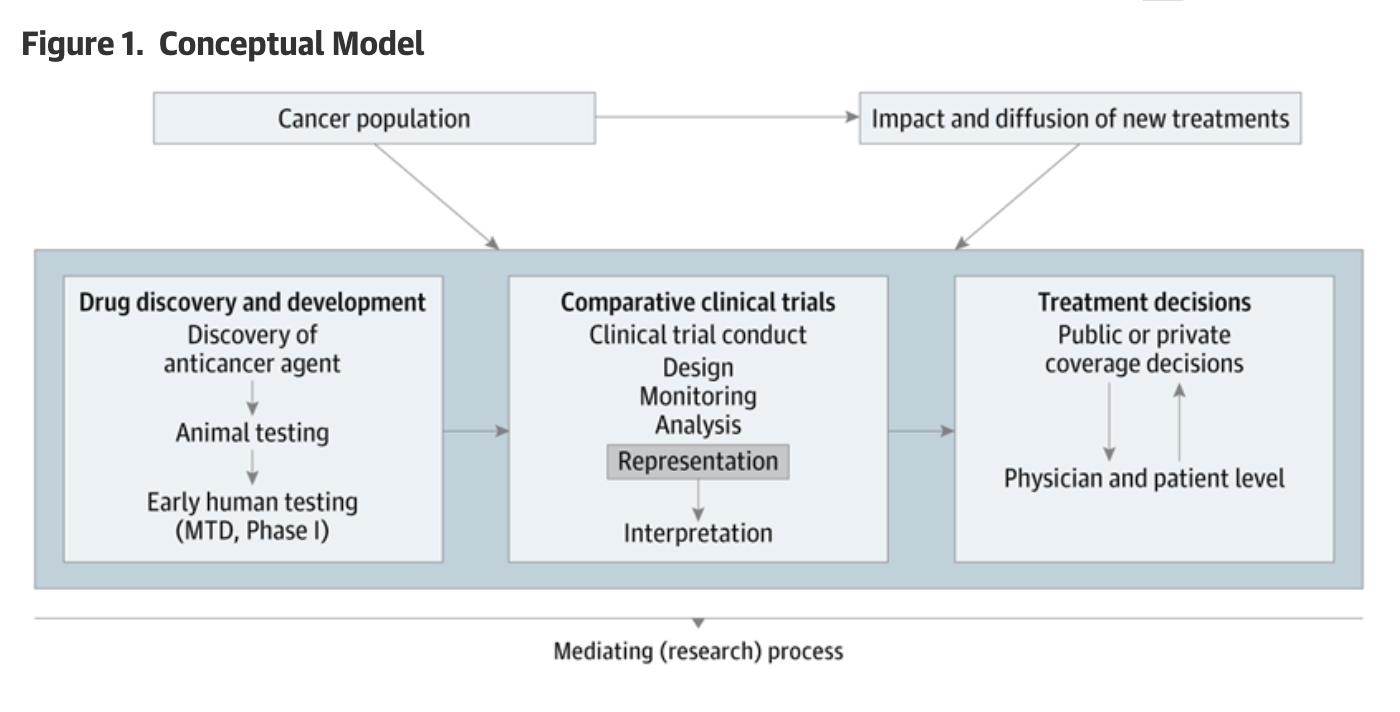
Photo Source: JAMA Network
This review, led by Joseph M. Unger, Ph.D., of the Fred Hutchinson Cancer Center in Seattle, WA, looked at 441 U.S.-based randomized Phase 2 or Phase 3 cancer treatment trials published in medical journals between 2020 and 2025, looking specifically for reporting of nine separate data points:
Rurality
Area-level deprivation (the relative socioeconomic conditions of an area)
Insurance Status
Income
Educational attainment
Age
Sex
Race
Ethnicity (Lennon, 2026)
Unger found that none of the 441 trials examined reported participant rurality, area-level deprivation, or income. Only 2 trials included educational attainment data, and just 1 trial reported insurance status.
The absence of these demographic characteristics is troubling, considering the significant impacts those social determinants have on health outcomes. A recent study published in the Journal of the National Cancer Institute found that, since the 1990s, rural parts of the United States have experienced significantly higher cancer mortality rates than those living in urban and suburban areas (Islami et al., 2026). These trends are largely driven by limited access to care, lower screening rates, higher levels of poverty, and a higher prevalence of smoking, as well as several other environmental and occupational factors that contribute to the development of certain types of cancers (American Cancer Society, 2026).
For years, pharmaceutical giants have been promising to make trials more diverse. PlusInc has regularly reported on both the importance of clinical trial diversity (Hopkins, 2023) and the lip service paid and excuses made by these companies to voluntarily make trials more diverse (Hopkins, 2024).
But let us be clear: the issue of incomplete or missing demographic data doesn’t just apply to clinical trials; it runs rampant throughout the entirety of the American healthcare research space.
Take the testing of patients for HIV. In most states, when a patient tests positive for HIV, the positive test result is reported and tabulated in the jurisdiction where the test was conducted, rather than the county in which the patient lives. For example, if a person living in Doddridge County, West Virginia, travels to Monongalia County to get tested for HIV (perhaps to avoid local health officials gossiping about the test results in contravention of HIPAA laws), the positive test result would be reported to the state for Monongalia, rather than Doddridge.
This presents a significant issue for developing effective health interventions and skews statistics to suggest that Doddridge County (in this example) has fewer new HIV diagnoses than it really does—potentially so few that the data are suppressed for patient confidentiality.
Underlying all of this discussion is the reality that it has become increasingly impossible to trust any data released by federal sources under the Trump Administration.
The Trump Administration has repeatedly been caught deleting, censoring, modifying, purposely skewing, or otherwise altering data or perverting data collection and reporting processes in order to appease administration officials and comport with administrative whims, outright lies, and talking points (Mervis, 2026; Qin, 2026; Ayoub, 2026; James, 2025).
Because of this, it is more important than ever for researchers and reputable publishers and organizations to fully investigate and report demographic data, if for no other reason than that complete reporting produces better, more actionable findings. The reality, though, is that this level of scrutiny and accountability is necessary in order to prevent the wholesale destruction of American research institutions this Administration seems hellbent on wreaking.