

Does the Measurement of Life Years Undermine Medical Innovation?
A recent report published by the U.S. Chamber of Commerce found that American medical innovations will deliver a projected $167.5 trillion in “societal value” over the next 30 years, as measured by the number of lives saved, lifespans extended, and the economic growth resulting from increased productivity and tax revenues (Philipson et al., 2026).
This new report focuses on just four disease states—HIV, heart disease, breast cancer, and obesity—and analyzes the development of treatments and biomedical advancements made over a four-year period using an approach that combines estimated health gains, healthcare savings, productivity impacts, and fiscal effects.
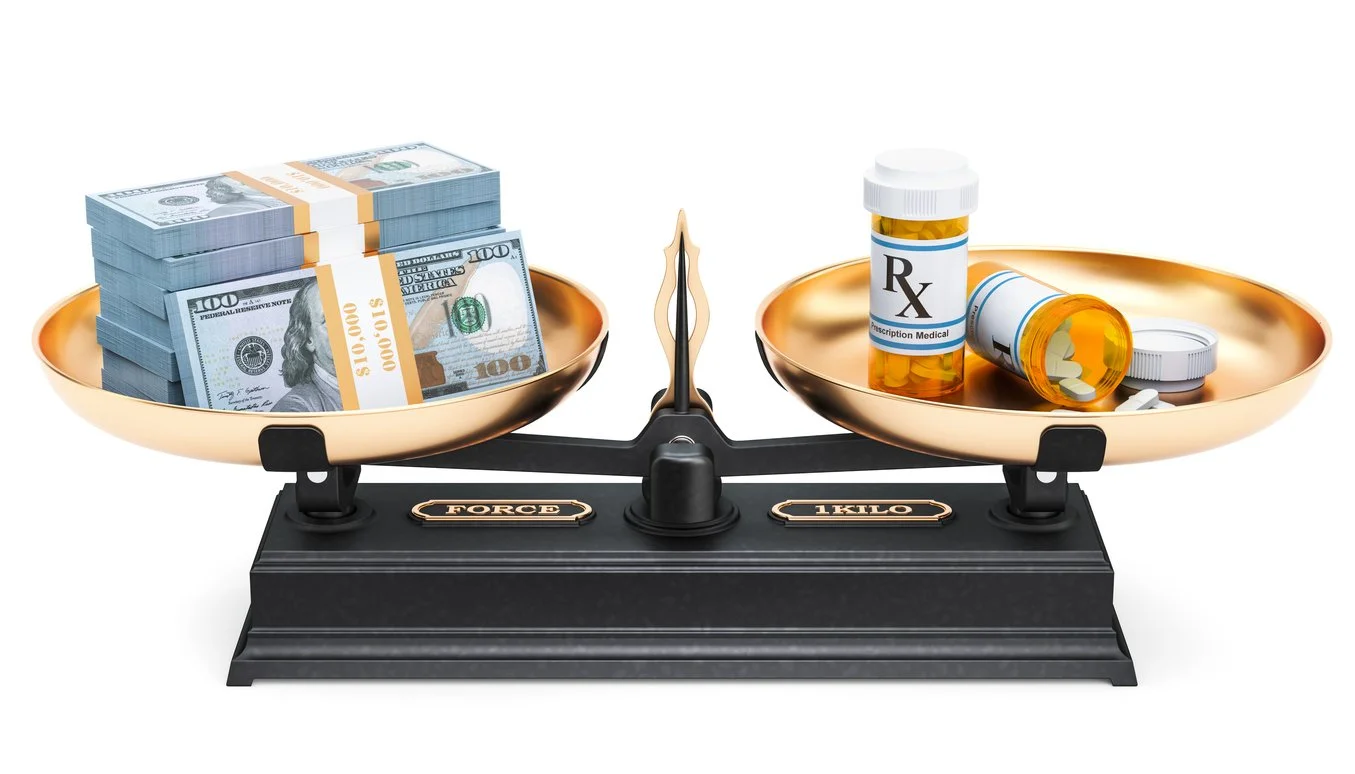
Source: iStock (rights purchased)
The problem with this analysis?
Quantifying the economic value of medical innovation relies on a metric called the Value of a Statistical Life Year (VSLY). VSLY metric is an estimate of the value society places on reducing the risk of dying, essentially asking the question, “How much is a society willing to pay to extend the lives of its members?” (Office of Impact Analysis, 2026).
Similarly, VSLY metrics estimate the value a society places on a year of life as measured by economic value:
How many additional years will a person live as a result of a medical intervention or policy?
How much additional economic value does that person contribute in the form of contributions through working, productivity, spending, and tax contributions?
Proponents of VSLYs argue that, while Quality-Adjusted Life Year (QALY) and Equal Value of Life Years Gained (evLYG) incorporate the status of one’s health, VSLYs focus solely on placing a value on statistical reductions in mortality risk:
Unlike QALY or evLYG, which incorporate health state preferences and are often debated for potentially embedding biases against people with disabilities or chronic illness, VSLY focuses solely on valuing statistical reductions in mortality risk, making it more neutral to health status and better aligned with societal valuations of life (Philipson et al., 2026).
Philipson et al. adopted an average baseline estimate of $558,812 for the value of a year of life gained or extended.
PlusInc has previously written about how QALYs have frequently been used by insurers, public payors, and governments around the world to determine whether medical treatments are cost-effective to cover for patients—often without any input from or consideration of the patients whose lives are affected (Hopkins, 2025). It also outlined how QALYs are fueling health disparities.
What the VSLY attempts to do is to remove the analysis of the value of an individual’s quality of life improvements based on a measure of a year of “perfect health” and refocus that valuation on how much economic value an individual will contribute as a result of a health intervention.
Both of these metrics are used by various entities and governments, in some form, to determine whether financial investments or expenditures should be made through a cost-benefit analysis. While QALYs attempt to measure one’s quality of life, VSLYs attempt to measure the projected economic value of a year of life.
In terms of what this means for policymakers, VSLYs are a great way to convince them to invest in medical innovation by showing that patients who gain access to those innovations will continue to “add value” to the economy through increased spending, tax revenues, and productivity gains for businesses.
It’s a business argument.
And just like the QALY, the VSLY has a baked-in discriminatory metric that researchers must adjust: economic contribution values are higher for the young than for the old.
How?
Well, the baseline contribution period in Philipson et al. is 30 years. So, if a patient benefits from a medical innovation when they’re aged 18-22—when most Americans enter into full-time employment—they are more likely to be able to contribute an additional 30 years of economic “value” than a patient who benefits from that medical innovation when they’re 50, nearing what was once considered to be the age of retirement in the U.S.
However, VSLYs allow policymakers to feel good about financially supporting medical innovations, whereas QALYs can make policymakers feel that allocating funds isn’t worth the investment because it won’t improve someone’s quality of life.
From a patient perspective, the use of both metrics places an inherent value on a life, and reduces the value of a life to a number:
Using QALYs, the value of a patient’s life is based on a measure of “perfect health,” essentially saying, “Unless a medication/procedure results in perfect health as we have defined it, this intervention is not worth the money.”
Using VSLYs, the value of a patient’s life is based on their economic contribution to society, essentially saying, “Unless a medication/procedure/policy results in $X in added economic value, this intervention is not worth the money.”
As with QALYs, the ultimate question is whether the use of VSLYs to measure cost-benefit can be abused or manipulated in ways that lead patients to pay the price.
If a policy or intervention impacts only older people, will the fact that they may not live another 30 years impact the decision to invest?
Hopefully, not.
But, when your life is reduced to a dollar amount, that’s the risk policymakers are willing to take.